


In the intersecting fields of modern optics and materials science, metamaterial technologies have garnered significant attention for their ability to transcend the electromagnetic responses of natural materials. These artificially designed micro/nano structures open new possibilities for advanced applications such as stealth capabilities, super-resolution imaging, and intelligent sensing.
However, to enable these precision structures to achieve peak performance in the near-infrared (NIR) band, one functional material is indispensable—high-performance near-infrared (NIR) absorbing dyes. They do not replace metamaterials but work in synergy with them, forming a complete optical functionality system.
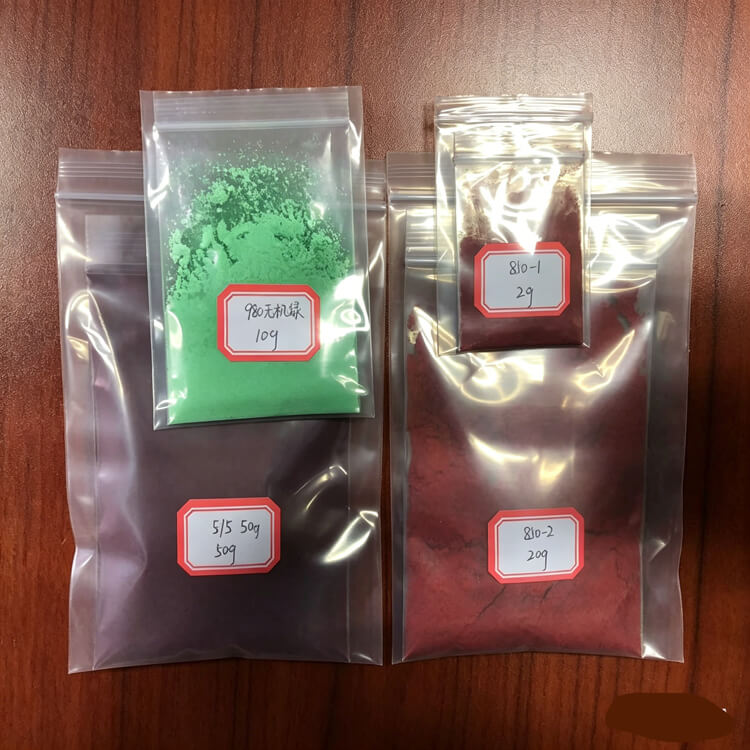
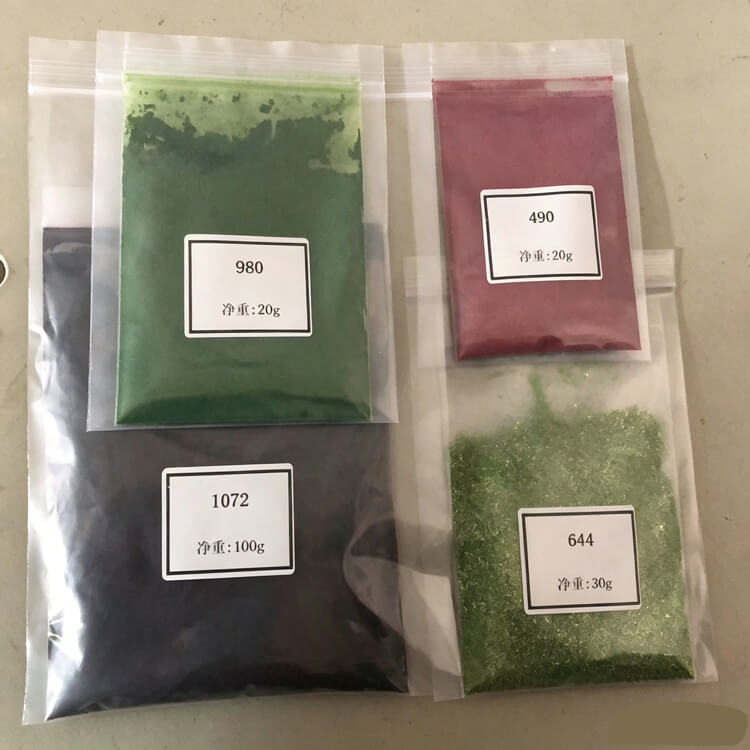 NIR Absorbing Dyes: Molecular Tools for Precision Light Management
While metamaterials manipulate electromagnetic waves through periodic structures, relying solely on structural design can be inefficient or process-complex when selective absorption of specific NIR bands (e.g., 700-1100nm) is required while maintaining other optical properties. Here, organic NIR absorbing dyes offer a precise, molecular-level solution.
Taking the NIR absorbing dyes provided by specialized chemical suppliers as an example, their core strengths lie in:
Precisely Tunable Absorption Peaks
Different applications have strict requirements for NIR absorption bands:
- Laser Protection: Must match common laser wavelengths such as 750nm, 780nm, 850nm, 908nm, and 980nm.
- Optical Filtering: Requires steep cut-off characteristics across the 710nm to 940nm range.
- Biomedical Imaging: Targets tissue penetration windows like 780nm, 808nm, 980nm, and 1064nm.
- Security & Anti-Counterfeiting: Utilizes invisible absorption bands from 850nm to 1064nm.
A reliable NIR dye supplier offers customizable absorption peaks, ensuring precise matching with the operating frequency of the metamaterial structure.
Process and Environmental Compatibility
Metamaterial devices often undergo high-temperature processing (such as injection molding or coating curing) or require long-term outdoor use. Therefore, the dyes must possess:
- Thermal Stability: Some grades can withstand processing temperatures up to 300°C.
- Light Fastness: Resistance to prolonged exposure to visible and UV light.
- Chemical Compatibility: Suitable for use with polycarbonate, PMMA, various printing inks, and coating systems.
Batch-to-Batch Consistency and Reliable Supply
As metamaterial devices transition from lab prototypes to mass production, the demand for material consistency becomes critical. Professional dye suppliers ensure stable performance across batches through rigorous quality control (e.g., testing purity, absorption wavelength, and emission wavelength) and a pre-shipment sample confirmation process, paving the way for industrialization.
Key Application Scenarios in Metamaterial Technologies
When advanced optical metamaterials are combined with NIR absorbing dyes, they form complementary functions that address several high-value applications:
Multispectral Low Detectability
Metamaterials can be designed to deflect or absorb electromagnetic waves in specific frequency bands, while NIR absorbing dyes precisely absorb characteristic wavelengths used in laser ranging or infrared imaging. The combination enables low detectability across radar, laser, and infrared spectra—a synergistic solution of significant value in high-end equipment and security applications.
Smart Optical Windows
In devices such as automotive LiDAR and security cameras, metamaterials can enhance transmission in specific frequency bands. Concurrently, NIR absorbing dyes act as cut-off filters, absorbing ambient interference (e.g., stray light around 940nm) to effectively improve the signal-to-noise ratio. Dyes characterized by steep cut-off and high visible light transmittance are ideal for such composite optical elements.
Dynamically Tunable Devices
Leveraging the photothermal effect of certain NIR absorbing dyes enables dynamic modulation of the effective electromagnetic parameters of metamaterials. For instance, by integrating dyes with specific absorption wavelengths into flexible metamaterials, external laser irradiation can induce localized temperature changes or refractive index variations, enabling switchable device states. This capability is crucial for advanced applications like reconfigurable intelligent surfaces.
Key Considerations for Selecting Professional NIR Dyes
For teams engaged in the R&D and production of advanced optical metamaterials, the following factors are critical when selecting an NIR dye supplier:
| Consideration | Specific Requirements |
|---|---|
| Spectral Precision | Minimal deviation in absorption peak; customized full width at half maximum (FWHM) and multi-peak options available. |
| Material Purity | Low impurity content to avoid affecting the formation of metamaterial structures or introducing unwanted absorption. |
| Process Compatibility | Available in various forms (powder, pre-dispersion, masterbatch) suitable for spin coating, inkjet printing, and melt compounding processes. |
| Technical Support | Provision of TDS and MSDS; support for sample testing; assistance with dispersion and compatibility issues during integration. |
| Supply Chain Stability | Scalable production capacity, ISO 9001 certification, and a proven track record of long-term, stable supply. |
Future Trends: Deep Integration of Molecular and Structural Engineering
As optical metamaterials advance into fields like terahertz, visible light, and multi-physical field control, the demands on complementary functional materials will become even more sophisticated. The evolution of NIR absorbing dyes will be closely intertwined:
- Multi-Peak Absorbing Dyes: Capable of suppressing multiple laser or infrared bands simultaneously, simplifying the complexity of metamaterial structural design.
- Smart Responsive Dyes: Incorporating electrochromic or photochromic properties to enable active environmental adaptation in metamaterial devices.
- Environmental Compliance: Adhering to international standards such as SGS to meet global market requirements for green materials.
Conclusion
On the path from laboratory innovation to scalable application of advanced optical metamaterials, near-infrared absorbing dyes have evolved from simple additives into critical functional layers that enable precision light management. Partnering with a supplier possessing deep expertise in molecular optics—offering everything from wavelength customization to comprehensive process support—empowers technology developers to transform cutting-edge concepts into reliable, manufacturable, and profitable solutions.
Enable your optical metamaterial designs to precisely “see” and “harness” the near-infrared spectrum. To explore how customizable NIR absorbing dyes can integrate with your technology system, please contact our technical team for a dedicated consultation.
info@topwellchem.com
Refer to:www.chinanews.com.cn/
Post time: Apr-02-2026