


Thermochromic powder, a temperature-sensitive pigment that reversibly changes color, unlocks new possibilities for interactive mugs. With global demand surging—the market is projected to grow from USD 2.2 billion in 2025 to USD 3.9 billion by 2034 (CAGR 6.6%)—this technology is key to creating high-value products for cross-border commerce. This guide provides a roadmap for application, covering material selection, compliant production, and creative design to develop market-ready products.
1. Understanding Thermochromic Powder for Mug Applications
Selecting the right thermochromic powder is fundamental; these microencapsulated pigments dictate the final quality and user experience of your mug.
Key Selection Criteria:
- Color Change Temperature Settings:
- General Use: A range of 43–45°C is optimal, triggering a change as soon as a hot drink is poured.
- Safety Indicators: Use a calibrated scale (e.g., green at 45°C, red at ≥60°C) to provide clear visual temperature warnings.
- Color Change Modes:
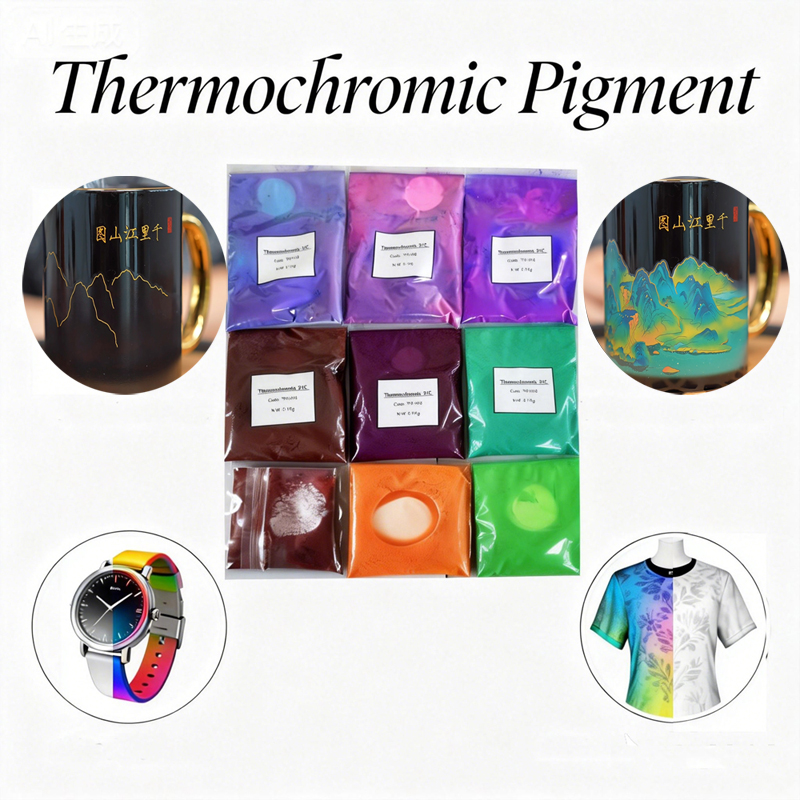
- Color-to-Colorless: Becomes transparent when heated (e.g., black to clear), revealing hidden patterns.
- Colorless-to-Color: Develops color upon heating, ideal for temperature indicators.
- Color-to-Color: Shifts between two hues (e.g., blue to pink) for dynamic visual effects.
- Environmental & Safety Compliance: Compliance hinges on selecting non-toxic, food-grade powders. Materials must meet key regulations (EU Framework Regulation (EC) No 1935/2004, French DGCCRF, US FDA) and be verified through testing to ensure no migration of heavy metals such as lead, cadmium, or hexavalent chromium.
- Durability: Select powder rated for thermal stability (curing ≤200°C) and high abrasion resistance to ensure lasting performance.
2. Step-by-Step Application Processes
Thermochromic powder is suitable for application on ceramic, plastic, and stainless steel mugs.
2.1 Application on Ceramic Mugs (Most Popular)
Ceramic mugs hold market dominance, driven by their durability and versatility.
- Pre-Treatment: Degrease and clean the mug surface to ensure it is free of contaminants, dry, and smooth.
- Pigment Preparation
- Formulation: Prepare a base mixture using 5–10% thermochromic powder by weight in a suitable binder (e.g., water-based ceramic glaze or UV-curable resin).
- Processing: Mix evenly to eliminate aggregates. The addition of a dispersant is recommended if clumping is observed to ensure a homogeneous blend.
- Application & Curing:
- Screen Printing: Ideal for high-volume runs. Use a 100–120 mesh screen for optimal paste deposition. Curing can be achieved through thermal means (80–120°C for 5–15 minutes with hot air) or, for faster throughput, via UV light.
- Spraying: Ideal for complex shapes or full coverage. Apply a thin, uniform layer and cure gradually to prevent cracking.
- Protective Coating: Apply and cure a clear, food-safe topcoat over the thermochromic layer. This seals the design to enhance abrasion resistance and prevent fading.
2.2 Application on Plastic & Stainless Steel Mugs
- Plastic Mugs: Use low-temperature curing binders (≤80°C) to avoid substrate damage. IMD or pad printing is recommended; ensure powder compatibility with PP, PE, or ABS plastics.
- Stainless Steel Mugs: Apply a primer to ensure adhesion; then print or spray the mixture. Cure at 120–150°C and finish with a heat-resistant topcoat.
 3. Critical Production Precautions
Avoid common pitfalls to ensure consistent quality:
- Temperature Control: To preserve the microcapsule structure, avoid exposure to temperatures exceeding 230°C. During curing, implement a controlled, progressive heating profile to ensure even and stable bonding.
- Mixing Ratios: Precision is critical. Deviation from the optimal 5–10% powder-to-binder ratio can compromise performance: an excess leads to uneven coloration, while an insufficient amount produces a weak color transition. Calibration within this range is essential.
- Storage: Keep powder in a sealed container in cool, dry conditions (15–30°C; <70% RH) to prevent moisture absorption.
- Compliance Testing (Export): Conduct mandatory heavy metal migration and sensory tests to validate compliance with target market regulations (e.g., FDA, DGCCRF).
4. Creative Applications to Boost Market Appeal
Capitalize on personalization and interactivity as key strategies. The color-changing mug market is projected to surpass USD 15.5 billion by 2025, with customized products achieving price premiums of up to 35%.
- Personalized Gifts: Print names, photos, or messages that appear when heated—popular for weddings, birthdays, and corporate gifts.
- Cultural Fusion: Integrate regional artistic elements (e.g., Chinese ink painting, Japanese ukiyo-e) for cross-border appeal.
- Interactive Reveals: Design hidden patterns (e.g., animals, quotes) that are revealed by the heat of a beverage, creating a shareable moment that encourages social media engagement.
- Functional Indicators: Implement a color-changing scale calibrated to transition (e.g., to green at 45°C and to red at ≥60°C) for intuitive temperature safety cues.
5. Market Trends & Export Opportunities
Fueled by robust demand across Southeast Asia, South America, the Middle East, and Africa, China’s exports of thermochromic pigments surged from 3,200 tons in 2021 to 4,800 tons in 2023.
- Eco-Demand: Develop water-based, solvent-free powders to meet strict environmental regulations.
- Smart Integration: Combine with QR codes or NFC tags on mugs to enable product tracing or interactive content.
- IP Collaboration: Partner with brands or cartoon characters to create limited-edition lines.
6. FAQ: Troubleshooting
- Q: Why does the color change fade after repeated use?
A: Likely due to insufficient curing or a missing topcoat. Ensure full curing and apply a high-quality protective layer. - Q: Can thermochromic powder be used for microwave-safe mugs?
A: Only if both the powder and binder are microwave-safe. Test thoroughly to avoid damage. - Q: How do I achieve a uniform color change?
A: Stir the powder-binder mixture thoroughly and apply thin, even layers. Thick coats can cause uneven heating and inconsistent color change.
By combining these application techniques with key market insights, you can develop premium color-changing mugs with global appeal. Our precision-engineered, food-safe thermochromic powder is ideal for mug production, offering fully customizable color-change temperatures and effects. Contact us today to request samples and expert technical support, and take your product line to the next level.
Post time: Jan-29-2026